
How to choose wall and floor colors together
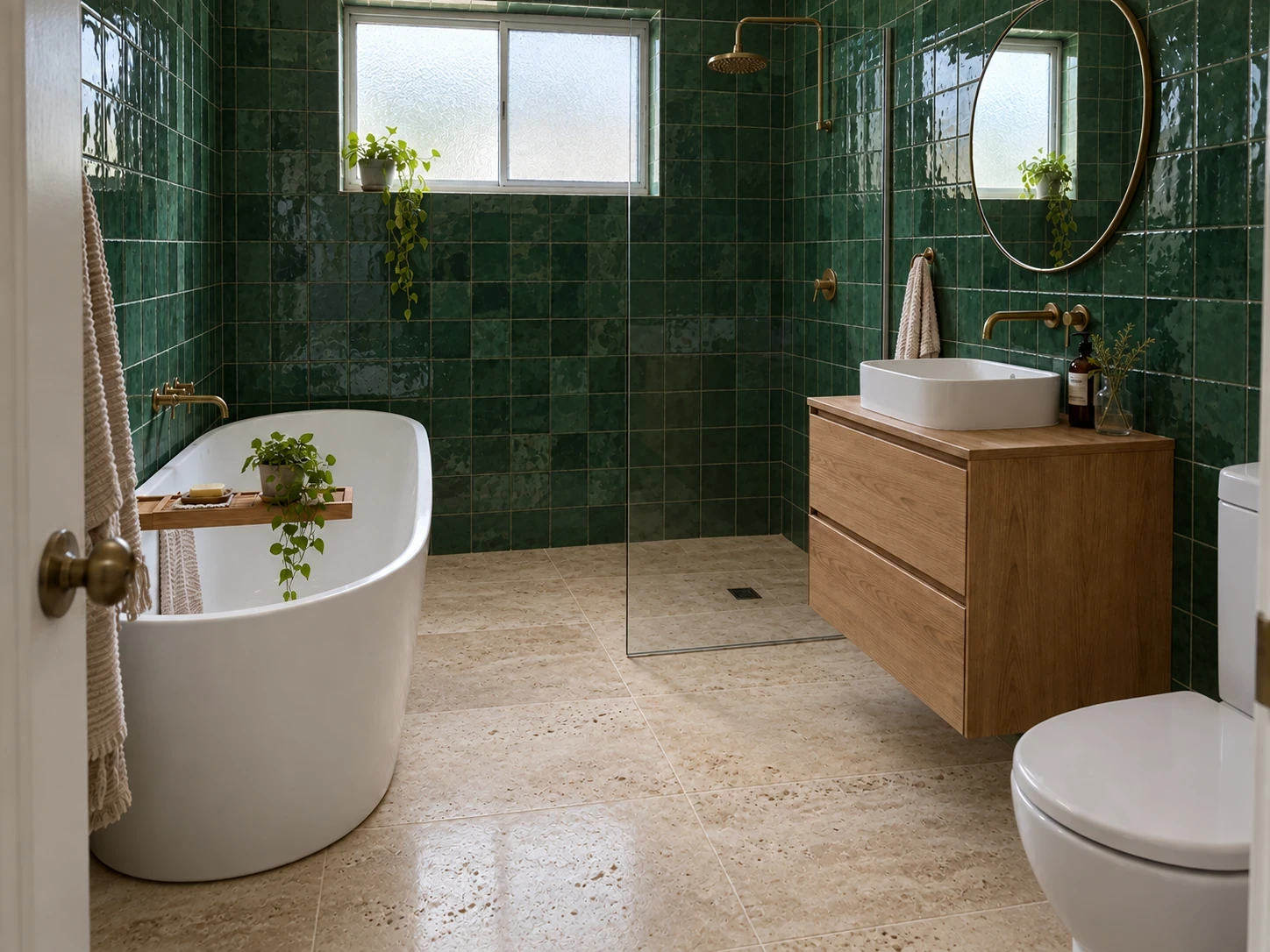
Wall and floor colors work as a pair. Choosing them separately can leave you with two finishes you like individually but dislike together. Start with whichever surface will remain, then compare a small number of alternatives for the other.
Identify the fixed finish
If you are keeping the floor, photograph it alongside the walls and main furniture. Include enough daylight to understand the room, but avoid an overexposed photo that hides the surface color. If the floor will change, choose a shortlist of materials before exploring wall options.
Also note fixed elements such as doors, trim, kitchen cabinetry or large furniture. These are part of the palette even if you are not changing them.
Compare warm and cool directions
Try one warmer wall direction and one cooler direction beside the same floor. Describe the material relationship rather than requesting a guaranteed paint code match. For example: “warm off-white walls beside the existing oak floor; keep all furniture.”
Use Surfaces, the wall and floor visualizer to select finishes or upload a material reference. The illustrative design concept image above is an illustration of this kind of change, not a calibrated color sample.
Change one variable at a time
First compare walls while holding the floor constant. Then compare floors with your preferred wall direction. This helps explain why one combination works better. Include trim and doors when their contrast is a major part of the room.
A whole-room style change can introduce extra furniture and textiles, making a surface comparison harder. Keep that broader exploration in Styles for a separate decision.
Test the shortlist in the actual room
Order physical samples and place floor samples horizontally. Check wall samples beside the floor, curtains and trim. Inspect them in daytime and evening lighting. Judge the finish as well as color: gloss, grain and texture do not transfer reliably from a visualization.
Do not expect a screen image to match a paint manufacturer’s shade exactly. Camera exposure, display settings and rendering can each alter the appearance.
Plan the work after the visual decision
Check material suitability, installation requirements and quantities with your supplier or contractor. Homeful can help narrow a direction, but it does not calculate coverage, installation costs or substrate preparation. Surfaces is available with Weekly, Monthly and Yearly; each new result or refinement uses another design.